
Aburasoba vs Ramen
What's the Difference?
Same noodles. No broth. Bolder flavor. Aburasoba is Tokyo's best-kept secret — and it's finally in Seattle. Here's everything you need to know.
If you've ever looked at a bowl of ramen and thought "I wish this was just the noodles and toppings, but more intense" — congratulations, you've independently invented the concept behind aburasoba. It's a style of Japanese noodle dish that's been hugely popular in Tokyo for decades but has barely made a dent in the American dining scene. Until recently, you couldn't find it anywhere in Seattle.
So what exactly is aburasoba, and how does it differ from the ramen you already know? Let's break it down.
The Simple Definition — Brothless Ramen
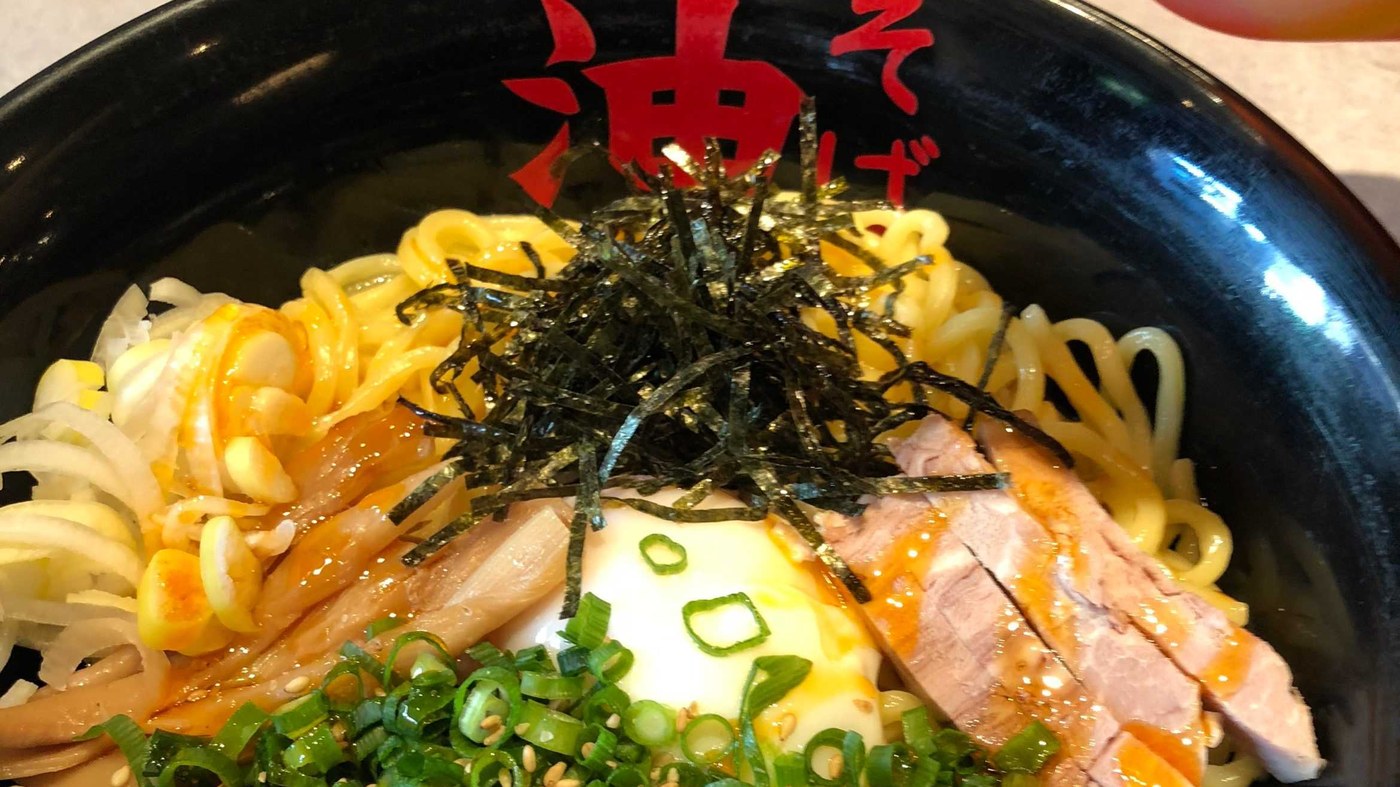
Aburasoba (油そば) literally translates to "oil noodles." The name is a bit misleading — it's not oily in the way you might think. The "oil" refers to the concentrated tare (sauce) that sits at the bottom of the bowl instead of broth. This tare is typically made from a blend of soy sauce, pork fat, sesame oil, and other umami-rich ingredients that vary by shop.
The noodles — usually the same thick, wavy wheat noodles used in ramen — are cooked and placed directly on top of this tare. Toppings go on top: chashu pork, menma bamboo shoots, nori, green onion, a soft-boiled egg. So far, it looks a lot like ramen. The key difference? There's no soup.
Instead of eating noodles floating in broth, you mix everything together from the bottom up, coating every strand in that concentrated sauce. The result is a fundamentally different flavor experience — more direct, more intense, and arguably more focused on the noodles themselves.
Side by Side — The Comparison
Here's how the two stack up across the key dimensions that matter when you're choosing what to eat:
| Ramen | Aburasoba | |
|---|---|---|
| Broth | Yes — tonkotsu, shoyu, miso, etc. | None — concentrated tare sauce |
| Noodles | Varies by style (thin to thick) | Thick, chewy wheat noodles |
| Flavor | Distributed through broth | Concentrated, coats each noodle |
| Customization | Limited after serving | Vinegar & chili oil at the table |
| Heaviness | Can be heavy (esp. tonkotsu) | Lighter — no liquid to fill you up |
| Eating Style | Slurp from soup | Mix from bottom, then slurp |
The Origin Story — 1950s Tokyo
Aburasoba emerged in Tokyo in the 1950s, most commonly credited to a shop called Chinchintei in Musashino City. The story goes that the owner, looking to create something quick and affordable for university students, stripped away the broth from traditional ramen and concentrated the flavors into a simple sauce.
The timing was no accident. Post-war Japan was rebuilding, and university neighborhoods were full of hungry students on tight budgets. Aburasoba was cheaper to make than broth-based ramen (no hours-long bone simmering), faster to serve, and just as satisfying. It spread rapidly through Tokyo's student districts — Waseda, Meiji, Keio — becoming a staple of the university food scene.
In Tokyo, aburasoba is university food. It's what you eat between classes when you want something fast, cheap, and legitimately good. It's been that way since the 1950s.
By the 2000s, aburasoba had evolved from budget student food into a respected culinary category in its own right. High-end shops began opening across Tokyo, experimenting with premium ingredients and creative tare recipes. Today, aburasoba sits alongside ramen as a co-equal pillar of Japanese noodle culture — not a subset of ramen, but its own distinct tradition.
To learn more about the history and philosophy, visit our About Aburasoba page.
The Ritual — Vinegar, Chili Oil, Mix
This is the part that surprises first-timers and the part that converts people into regulars. When your bowl of aburasoba arrives, you don't just start eating. There's a tableside ritual that transforms the dish.
Step one: Add vinegar. A splash of rice vinegar cuts through the richness of the tare and brightens the whole bowl. Start with a small amount — you can always add more.
Step two: Add chili oil. This isn't about making it spicy (though it can be). The chili oil adds warmth and depth. Again, start conservative.
Step three: Mix from the bottom. This is crucial. The tare sauce pools at the very bottom of the bowl beneath the noodles. Use your chopsticks to lift and turn the noodles from the bottom up, coating every strand in that concentrated sauce. You want full coverage.
The beauty of this system is that you control the flavor. Every bowl is customized to your personal preference — more vinegar for brightness, more chili for heat, or just the tare on its own. It's interactive in a way that ramen simply isn't.
Come try the ritual yourself — check out our full menu to see the different aburasoba styles we offer, from the classic Salt-Based ($17) to the signature Tokyo Ganso with parmesan and poached egg ($19).
Where to Try It — Seattle's Only Aburasoba
Here's the thing: until Slurp Station opened in the University District, you couldn't get aburasoba anywhere in Seattle. Not at any ramen shop, not at any Japanese restaurant, nowhere. If you wanted it, you were flying to Tokyo or maybe Los Angeles.
We're at 4701 Brooklyn Ave NE — one block east of The Ave, a few minutes from UW campus. The university district location is a nod to aburasoba's roots as Tokyo student food. Open daily 11 AM – 9 PM, with free dedicated parking (a genuine rarity in the U-District).
Whether you're a ramen veteran looking for something new or a complete noodle novice, aburasoba is worth trying at least once. It might just change the way you think about Japanese noodles entirely.
Try Aburasoba for Yourself
Slurp Station is Seattle's first aburasoba restaurant — brothless ramen with concentrated Tokyo-style flavors. Open daily 11 AM – 9 PM at 4701 Brooklyn Ave NE with free parking. Come discover the noodle dish Tokyo's been obsessed with since the 1950s.