
Quick Facts
- Dates: Friday, July 24 – Sunday, July 26, 2026
- Hours: 11 AM – 8 PM each day
- Location: Seattle Center campus (near the Space Needle)
- Admission: Free to enter; food and drink sold separately
- This year: The 41st annual Bite of Seattle
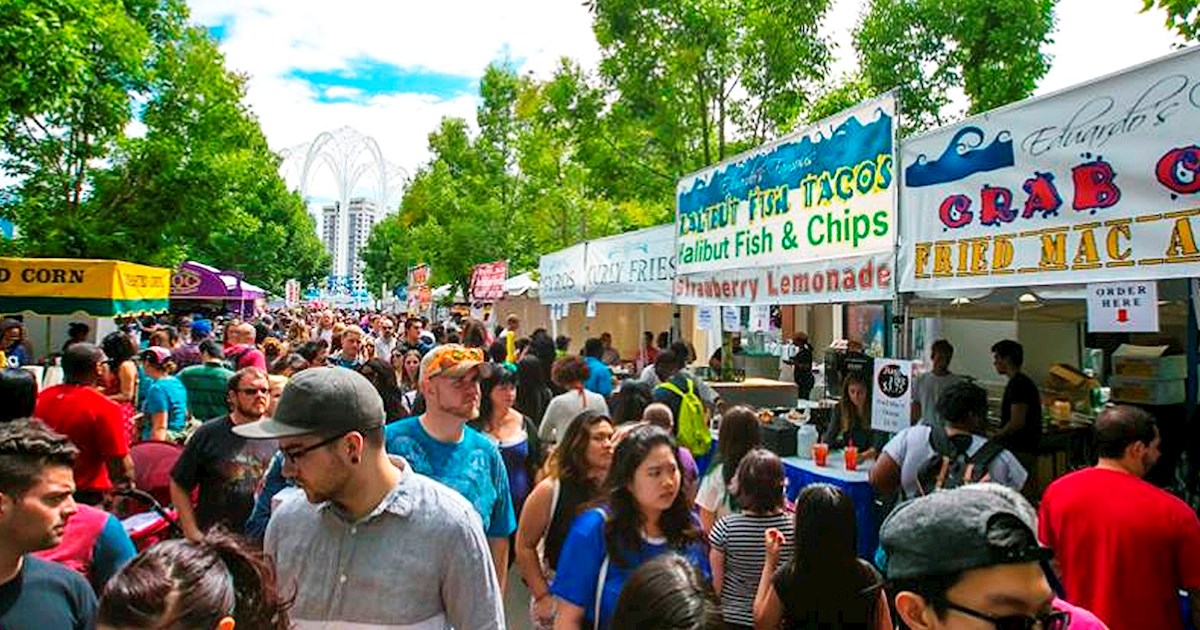
Every July, Seattle Center turns into a three-day, city-wide open house for food. Bite of Seattle is the Pacific Northwest's largest food festival, and in 2026 it's celebrating its 41st year — running July 24 through 26, from 11 AM to 8 PM daily, with free admission. If you've lived in Seattle for any length of time, you've probably heard someone mention "the Bite" the way locals mention the Fremont Solstice Parade: an event that's just part of the city's summer rhythm. Here's what it actually is, a bit of its history, and some practical advice for navigating a festival that draws crowds in the hundreds of thousands.
A festival that's older than you'd think
Bite of Seattle isn't a new pop-up trend — it dates back to 1982, when Festivals Inc. founder Alan Silverman launched it as a one-day tasting event at Green Lake Park. Organizers expected roughly 20,000 to 25,000 people; about 75,000 showed up. The event outgrew Green Lake within a few years and moved to Seattle Center in 1986, where it's been held ever since (with a pause in 2020-2021 for the pandemic, and a rocky, app-plagued comeback in 2023 that organizers have since worked to smooth out).
It grew from two dozen restaurants into an event with hundreds of food and beverage vendors, beer and cider gardens, cooking demonstrations, and live music across multiple stages — the Fountain Lawn Stage, the Mural Stage, and the Fisher Green Stage among them. Attendance has historically run into the hundreds of thousands across the three days, depending on weather and the year.
What it's actually like on the ground
Bite of Seattle isn't a sit-down dinner — it's a grazing event. Vendors sell food in small, sampler-sized portions, so the appeal is trying a wide range of things rather than filling up at one stand. Expect a mix of Seattle-area restaurants, food trucks, specialty producers, and sponsor booths, alongside beer and wine gardens that require separate ID checks and wristbanding. A few tips if it's your first time:
- Go early or go late. The 11 AM opening and the last hour or two before 8 PM are noticeably less packed than mid-afternoon on Saturday.
- Wear shoes you can stand in for hours. Seattle Center's plazas are concrete, with a lot of walking between stages and food areas.
- Plan transit ahead. Seattle Center sits at the base of Queen Anne, and street parking disappears fast on Bite weekends. Light rail to Westlake or the Monorail from downtown are usually the least stressful options.
Where dry ramen fits into the picture
Festival food is, by design, fast, portable, and eaten standing up or walking. That's part of the fun of an event like Bite of Seattle — but it also means most of what's on offer leans fried, sauced, or served in a paper boat. If you're spending a full day at the festival, or you live in the area and want something different afterward, it's worth knowing about a style of food that sits at the opposite end of the spectrum from fair food: aburasoba, or Japanese dry ramen.
Aburasoba swaps the broth most people associate with ramen for a sauce-coated bowl of noodles — thick, chewy noodles tossed in a seasoned oil-and-soy base, topped with chashu pork, marinated bamboo shoots, nori, and usually a soft-cooked egg. It originated in Tokyo in the 1950s, reportedly born out of a wartime-era shortage of ingredients for broth, at a shop believed to be the first to serve ramen noodles without soup. The format stuck because it works: no broth means no soup sweat, more concentrated noodle flavor, and a bowl meant to be eaten sitting down and mixed tableside with vinegar and chili oil to taste.
That contrast — walk-around festival bites versus a composed, sit-down bowl — is worth sitting with for a second, because it's also the reason a dish like aburasoba doesn't turn up among the festival's vendor booths. The University District, about a 15-20 minute drive or light rail ride from Seattle Center, is where that style of ramen is easiest to find in Seattle.
Why dry ramen skips the festival circuit
Aburasoba is built around being mixed to order: the noodles get tossed with sauce, oil, and chili right before serving, then eaten fairly promptly so they don't sit and go gummy in the bowl. That's a cook-to-order dish, made and served in sequence for one table at a time — not something staged ahead in trays so a line can move through quickly.
A festival runs on different logic. Bite of Seattle's whole draw is grazing — working through a wide range of booths in small portions, with lines built to move fast so more people can sample more stalls. That format is a great match for food meant to be eaten one-handed while walking. It's a harder fit for a bowl that's meant to be tossed, mixed, and eaten seated with both hands on chopsticks.
None of that means dry ramen couldn't survive festival speed — it means doing it well depends on the sit-down, no-rush pace that's the whole point of the dish. Rather than compress that into a grab-and-go version, the better bowl is the one served at the restaurant itself: made fresh to order and eaten without a clock running. If Bite of Seattle has you in the University District before or after the festival weekend, that's the better time to try it.
Planning around Bite of Seattle weekend
Seattle Center sits next to the Space Needle, Chihuly Garden and Glass, and MoPOP, so a lot of visitors pair a Bite visit with sightseeing. Traffic and parking around Queen Anne get tight during festival hours, so plan transit in both directions rather than counting on street parking near the gates.
For the most current details — lineup, stage schedules, and any last-minute changes — the festival's official site at biteofseattle.com and the Seattle Center events page are the best sources heading into the weekend.
Back to Blog