
By mid-July, Seattle has usually settled into its best weather of the year — long evenings, low humidity, the kind of warmth that makes the city feel almost tropical for a few precious weeks. It's the season when a steaming bowl of tonkotsu loses some of its magic. When you want something cold, bright, and just as satisfying. This summer, you're not alone in that instinct. Cold noodles — long a pillar of Japanese warm-weather eating — are having a moment on the global food radar. And the cultural signals don't get much bigger than what Nissin just did.
What Is Hiyashi Chuka?
The story of cold ramen in Japan begins with hiyashi chuka (冷やし中華), which translates roughly to "chilled Chinese-style noodles." It's a dish that shows up on menus across Japan like clockwork every June, and disappears just as reliably when the leaves start to turn. Restaurants post signs — hiyashi chuka hajimemashita, "we've started serving cold ramen" — that function almost like an informal announcement that summer has arrived.
The dish itself is deceptively simple: chilled wheat noodles, typically served in a shallow bowl, topped with a carefully arranged spread of colorful ingredients. Julienned cucumber, thin-sliced ham or chicken, shredded egg crepe, tomato wedges, and pickled ginger are common. The dressing is usually either a tangy soy-vinegar tare or a creamy sesame sauce. You toss everything together and eat it cold — refreshing, vibrant, and deeply satisfying in a way that hot food rarely can be at 85°F.
The dish traces its origins to the 1930s, when Chinese-influenced restaurants in Japan began experimenting with serving noodles cold during summer months. By the postwar era it had become a fixture. Today it's one of those foods that Japanese people associate viscerally with summer — like snow cones or watermelon, but with more umami.
Why Cold Noodles Just Work in Summer
There's real food science behind why cold noodles hit differently when it's hot. For one, heat suppresses appetite — your body redirects blood flow away from the digestive system when it's working to cool you down. Cold food requires less metabolic effort to process, and the sensation of eating something chilled provides immediate sensory relief. You can eat more, enjoy it more, and feel better afterward.
Texture also plays a role. Cold noodles have a firmer bite than hot ones — the starch structure doesn't soften and bloat the way it does in a hot broth. Chilled wheat noodles have a springiness, an almost snappy resistance, that makes them extraordinarily satisfying to chew. There's a reason Japanese food culture has a specific word for this quality: koshi, the pleasant elasticity of well-made noodles. Cold amplifies it.
Then there's the flavor question. Hot broth does extraordinary things — it extracts aromatics, carries fat-soluble compounds, bathes the palate in umami. But heat also blunts some flavors over time: volatile acids fade, bright citrus notes dissipate, fresh herbs wilt. Cold preparations preserve all of that. A cold tare made with rice vinegar and soy sauce tastes more itself than a hot one would. The flavors stay distinct, clean, and vivid. For an acidic or sesame-forward sauce especially, cold service is objectively the better choice.
Cold amplifies the springiness of wheat noodles, preserves bright flavors, and makes eating feel effortless when summer heat suppresses your appetite. It's not a compromise — it's a different (and sometimes superior) mode entirely.
The Nissin Signal: Cold Noodles Go Mainstream
On July 20, 2026 — just this past weekend — Nissin launched the Hiyashi Cup Noodle in Japan. It's a significant product: the first Cup Noodle in the brand's history specifically designed to be made with cold water. No boiling, no kettle, no waiting for it to cool down. You pour cold water in, wait a few minutes, and eat. The initial rollout comes in two flavors: Spicy Kimchi and Salt Lemon.
This matters more than it might sound. Nissin invented the instant noodle. Cup Noodle is one of the most recognized food products in the world. The company is celebrating its 55th anniversary this year — and it chose to mark that milestone, in part, by completely rethinking its core preparation method. Not to improve on the hot cup noodle, but to build an entirely parallel cold version.
When a company like Nissin makes that kind of bet, it's responding to something real. Japan's convenience store industry is extraordinarily data-driven. Product launches at this scale don't happen on a whim — they follow years of consumer behavior data, market testing, and trend analysis. The Hiyashi Cup Noodle is Nissin's verdict that cold noodles aren't a niche preference or a regional quirk. They're a mainstream demand signal.
It's also worth noting the flavor choices: Spicy Kimchi and Salt Lemon. Both are bright, acidic profiles that thrive in cold applications. A kimchi-forward sauce with its fermented punch, a salt-lemon tare with citrus lift — these are the exact flavor profiles that food scientists would design for cold service. Nissin clearly understands what cold noodles want to be.
Aburasoba: The OG Cold Noodle
Here's the thing: while the instant noodle industry is just now engineering its first cold-water product, the aburasoba tradition has been living in this exact space for decades.
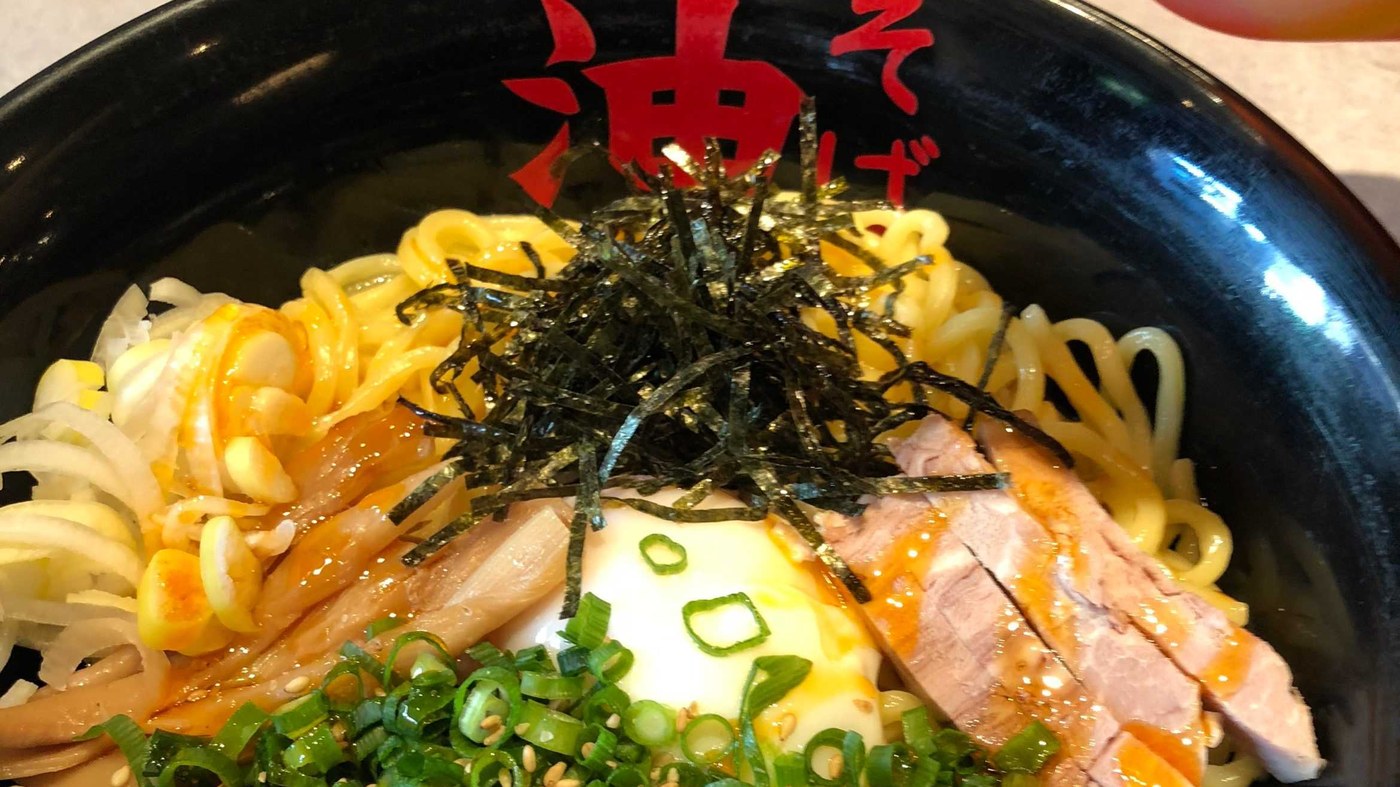
Aburasoba (油そば) — literally "oil noodles" — is a brothless style of ramen that originated in Tokyo in the 1950s. Instead of a bowl of liquid broth, it comes with a concentrated tare at the bottom of the bowl: a deeply flavored sauce made from soy, pork fat, sesame oil, and other aromatics. The noodles sit on top. You toss everything together before eating, coating each strand in the sauce. There's no liquid to sip, no broth to slurp. It's a bowl of pure noodle, pure sauce, pure toppings.
Because there's no broth to maintain at temperature, aburasoba is naturally suited to room-temperature or slightly cool service. In fact, many aburasoba shops in Japan serve it at just below body temperature — warm enough for the sauce to stay fluid and fragrant, cool enough to eat comfortably in summer. The dish has never needed to be piping hot. The fat in the sauce carries flavor at any temperature. The noodle texture, without broth softening it, stays firmer and more satisfying longer.
While Japan's convenience stores are celebrating the innovation of cold instant noodles in 2026, the aburasoba category has been offering a naturally cold-compatible noodle experience since the Showa era. In some sense, aburasoba solved the summer noodle problem before the problem was widely recognized. It's the original cold noodle — the one that never needed rethinking.
Finding It in Seattle
Seattle's summers have been warming. The past few Julys have seen stretches of real heat — 90°F days that would have seemed anomalous a decade ago. The city has been quietly renegotiating its relationship with warm-weather food, seeking out dishes that feel light and refreshing without sacrificing depth or satisfaction. Cold noodles fit that moment exactly.
If you're curious about cold ramen in Seattle, aburasoba is the most natural entry point. Slurp Station, located at 4701 Brooklyn Ave NE in the University District, is Seattle's first aburasoba restaurant. The bowls are served in the traditional Tokyo style: brothless, saucy, with concentrated umami tare at the base. The format that Nissin just spent 55 years building toward has been available in the U District for a while now.
Whether you arrive knowing exactly what hiyashi chuka is, or you just want something that isn't hot soup on a warm afternoon, the cold noodle tradition has a lot to offer. Japan figured this out generations ago. The rest of the world is starting to catch up.
Back to Blog