
If you've spent any time in r/RamenNoodles, r/FoodPorn, or the dozens of noodle-adjacent corners of Reddit, you already know the format: someone posts a hand-drawn tier chart — S at the top, F at the bottom — and drops in twenty instant noodle brands from a dozen countries. Within hours the comment section has 400 replies arguing about whether Indomie Mi Goreng belongs in S-tier or whether that's just nostalgia talking.
Instant ramen tier lists aren't a passing meme — they're one of the most reliable recurring post formats in the whole food side of the internet, up there with "rate my fridge" and knife-skills videos. And they reveal something genuinely interesting about how people think about flavor, nostalgia, and value. Here's why the format works, what the community actually argues about, and — because it's a question that comes up constantly in these threads — how instant noodle soups compare to a completely different noodle category: aburasoba, the oil-based, no-broth ramen style that's been trending on its own for entirely different reasons.
Why tier lists took over ramen Reddit
Tier list culture originated in competitive gaming — ranking characters or weapons from S (best) to F (worst) — and it migrated to food content because it solves a real problem: there are hundreds of instant noodle brands worldwide, most people have only tried a handful, and everyone has a wildly different frame of reference depending on where they grew up. A tier list format forces that chaos into something scannable and arguable in the same breath.
It also taps into three things Reddit food communities love: nostalgia (the brand you grew up eating always punches above its objective quality), tribalism (regional pride runs deep — Filipino users defending Lucky Me!, Indonesian users defending Indomie, Korean users defending Buldak or Shin Ramyun), and the simple dopamine of a ranked list you can disagree with. A tier list is an invitation to argue, and arguing about instant noodles is low-stakes enough to be fun and high-stakes enough (to noodle people) to be genuinely heated.
What Reddit actually argues about
Scroll through enough of these threads and the debates cluster around a handful of recurring criteria — the same ones that show up whether the thread is about a $0.50 bag or a $3 import:
- Broth concentration and seasoning packet quality. This is usually argument number one. Some brands (Buldak, Nongshim) are praised for seasoning that tastes complex on its own; others get dinged for seasoning that's mostly salt and MSG with little depth.
- Noodle texture and chew. Reddit is obsessed with "springiness" and whether noodles hold up or go mushy at the two-minute mark. Korean and some Japanese-style instant noodles tend to score well here; thinner noodle styles get criticized for going limp fast.
- Spice authenticity vs. spice-for-spice's-sake. Threads regularly split into camps over whether a noodle's heat tastes "earned" (built from real chili flavor) or just cranked up as a gimmick.
- MSG — love it or hate it. This is one of the most contentious recurring sub-threads. A vocal contingent treats heavy MSG usage as a badge of honor ("that's why it tastes so good"), while another treats it as a mark against a brand. Food scientists have long noted MSG itself isn't the health villain it was once portrayed as, but the debate persists culturally regardless.
- Value and regional availability. A brand that's dirt cheap and everywhere (Nissin, Maruchan) tends to get graded on a curve — "great for the price" is its own tier, separate from "objectively best."
- Dish format. Soup-style versus dry/stir-fry-style instant noodles (like Indomie Mi Goreng or Lucky Me! Pancit Canton) often get ranked in entirely separate lists, because judging a soup noodle against a dry noodle by the same criteria doesn't really work.
Roughly where popular brands tend to land
No two Reddit tier lists agree perfectly — that's half the fun — but after reading through enough of them, some patterns repeat often enough to be worth summarizing. This is commentary on a well-known internet trend, not an official ranking of anyone's product:
| Typical Reddit Tier | Brands Frequently Placed There | Common Reasoning Cited |
|---|---|---|
| S / A-Tier | Samyang Buldak, Nongshim Shin Ramyun, Indomie Mi Goreng | Bold, distinct seasoning profile; strong noodle texture; heat that feels intentional |
| A / B-Tier | Nissin Demae Itcho, MAMA (Tom Yum, Pad Thai varieties), Nongshim Soon Veggie | Reliable flavor, good aromatics, sometimes praised for being lighter or more "soup-forward" |
| B / C-Tier | Lucky Me! Pancit Canton, Wai Wai, Kung-Fu | Nostalgia-driven regional favorites; praised for value, occasionally critiqued on noodle thinness |
| Contested / Split Opinion | Hao Hao, most "budget" instant brands | Loved by people who grew up on them, dismissed by others as generic — classic nostalgia-vs-objectivity split |
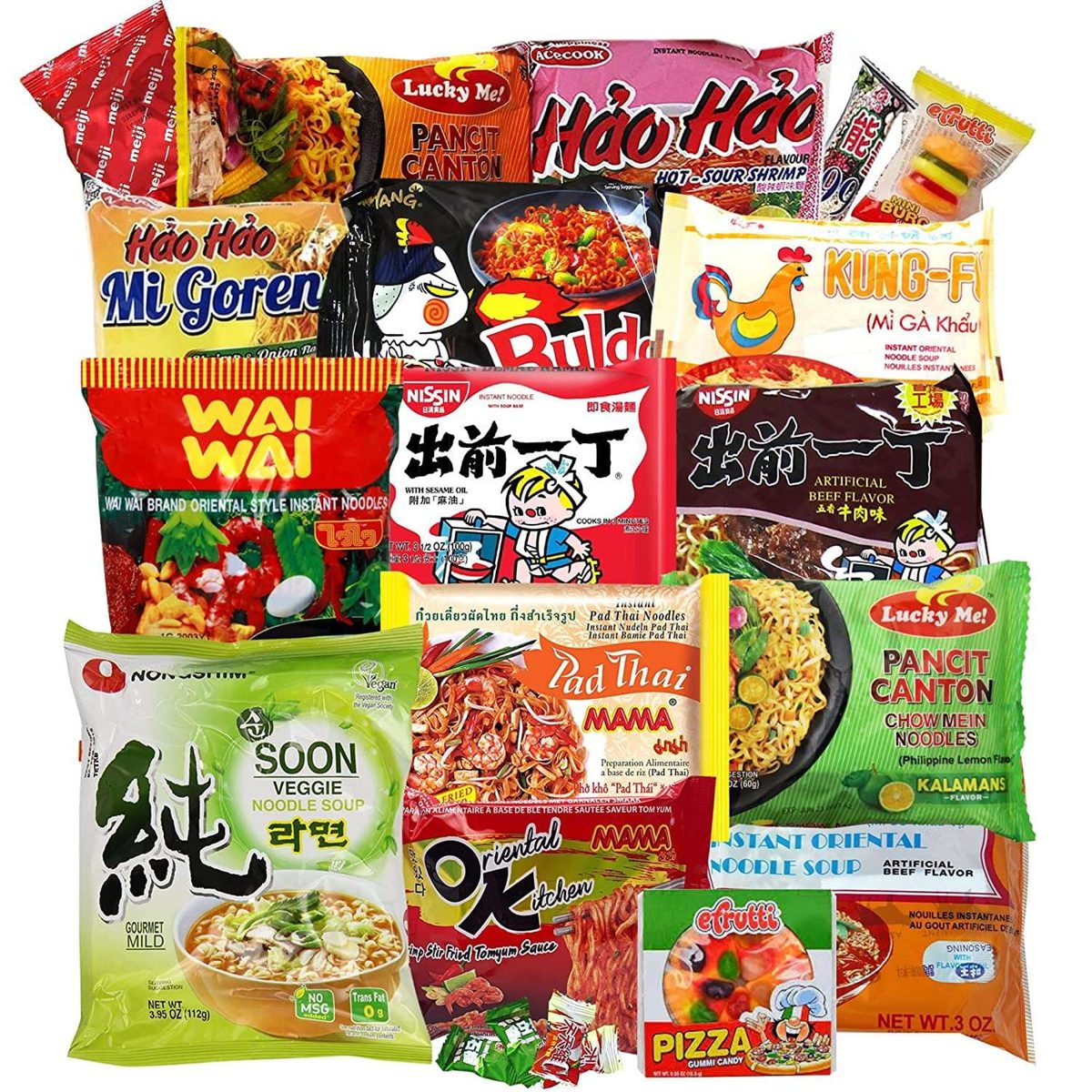
A typical variety pack you'll see referenced in these threads bundles brands like Hao Hao, Lucky Me! Pancit Canton, Wai Wai, Nissin Demae Itcho, Nongshim Soon Veggie, MAMA Pad Thai and Tom Yum, Kung-Fu, and Samyang Buldak into one box — which is basically a starter kit for exactly the kind of side-by-side comparison Reddit tier lists thrive on. It's also a good illustration of how wide the category actually is: soup noodles, dry stir-fry noodles, mild and intensely spicy, all sitting in the same cardboard box under the umbrella term "instant ramen."
So what is aburasoba, and why doesn't it show up in these lists?
If you search "aburasoba" alongside these Reddit tier list threads, you'll notice something: it almost never shows up, and for good reason — it's not really the same category of food. Aburasoba (油そば, literally "oil noodles") is a Japanese ramen style that skips broth entirely. Instead of swimming in soup, the noodles are tossed in a seasoned oil-and-soy base, then finished with toppings — usually chili oil, vinegar, scallions, nori, and often a soft egg — that the eater mixes in themselves at the table.
That's the core distinction worth understanding: instant ramen tier lists are almost always ranking soup-style noodles (or, in a smaller sub-category, dry stir-fry noodles like Pancit Canton or Mi Goreng). Aburasoba isn't a soup and isn't a stir-fry — it's its own third format, built around a coated, glossy noodle with concentrated flavor sitting directly on the surface of each strand rather than diluted into broth. The format originated in Tokyo in the 1950s at a shop called Musashiya, reportedly as a way to use up noodles without needing a full broth setup, and it's grown into its own devoted niche within ramen culture since.
Instant noodles vs. fresh, made-to-order noodles — what actually changes
Beyond format, there's a more fundamental difference between anything from an instant noodle package and fresh noodles made to order, aburasoba or otherwise:
- The noodles themselves. Instant noodles are flash-fried or air-dried for shelf stability, which changes their texture permanently — that's part of why "does it hold up after five minutes" is such a common Reddit complaint. Fresh noodles are cooked to order in water, just before serving, and never go through a dehydration step.
- The flavor base. Instant seasoning packets are built around dehydrated flavor concentrates, oils, and often MSG for shelf-stable umami. Fresh aburasoba typically use a made-in-house tare (a soy-based seasoning sauce), fresh aromatics, and oils blended specifically for that batch — no dehydration step needed because it's assembled the same day.
- Technique and timing. Instant noodles are designed to be idiot-proof — add hot water, wait a few minutes. Made-to-order aburasoba is a technique-dependent dish: the noodles need to be cooked to a specific chew, drained thoroughly (excess water dilutes the oil coating), and tossed table-side while still hot enough to bind the sauce evenly across every strand.
- What you're actually comparing. None of this makes instant ramen "bad" — it's a different product built for a different purpose: convenience, shelf life, and price. It's just genuinely a different food category from fresh noodles, the same way a frozen pizza and a wood-fired pizza are both "pizza" but aren't really being judged by the same standard when people talk about either one.
For what it's worth, if the instant ramen tier list conversation has you curious what a fresh, made-to-order aburasoba actually tastes like, Slurp Station in Seattle's U-District makes it the traditional way — noodles cooked and tossed to order, no broth, no shortcuts. It's a good way to taste the format the tier lists aren't really talking about.
Either way — instant noodle deep dives or fresh noodle bowls — ramen's range as a category is part of what makes it endlessly discussable. The Reddit tier list wars aren't going anywhere, and honestly, that's a good thing. Arguing about noodles is one of the more harmless hobbies the internet has produced.
Back to Blog