
Ramen Officially Beat Sushi in Japan.
Here's What That Means for Your Bowl.
18.9% vs 14.5%. Japan's own Tourism Agency confirmed it — ramen is now the most satisfying food experience for foreign visitors. The era of sushi as the default is over. Here's why that matters.
For decades, sushi was the undisputed face of Japanese food. It was the first word anyone said when you asked them what to eat in Japan. The gateway dish. The postcard.
That era just quietly ended.
According to a March 2025 report from Japan's Tourism Agency, when foreign visitors were asked which food gave them the most satisfying dining experience, ramen came in at 18.9% — outpacing sushi, which landed at just 14.5% and slipped to third place. Not a statistical blip. A cultural shift, confirmed by the Japanese government.
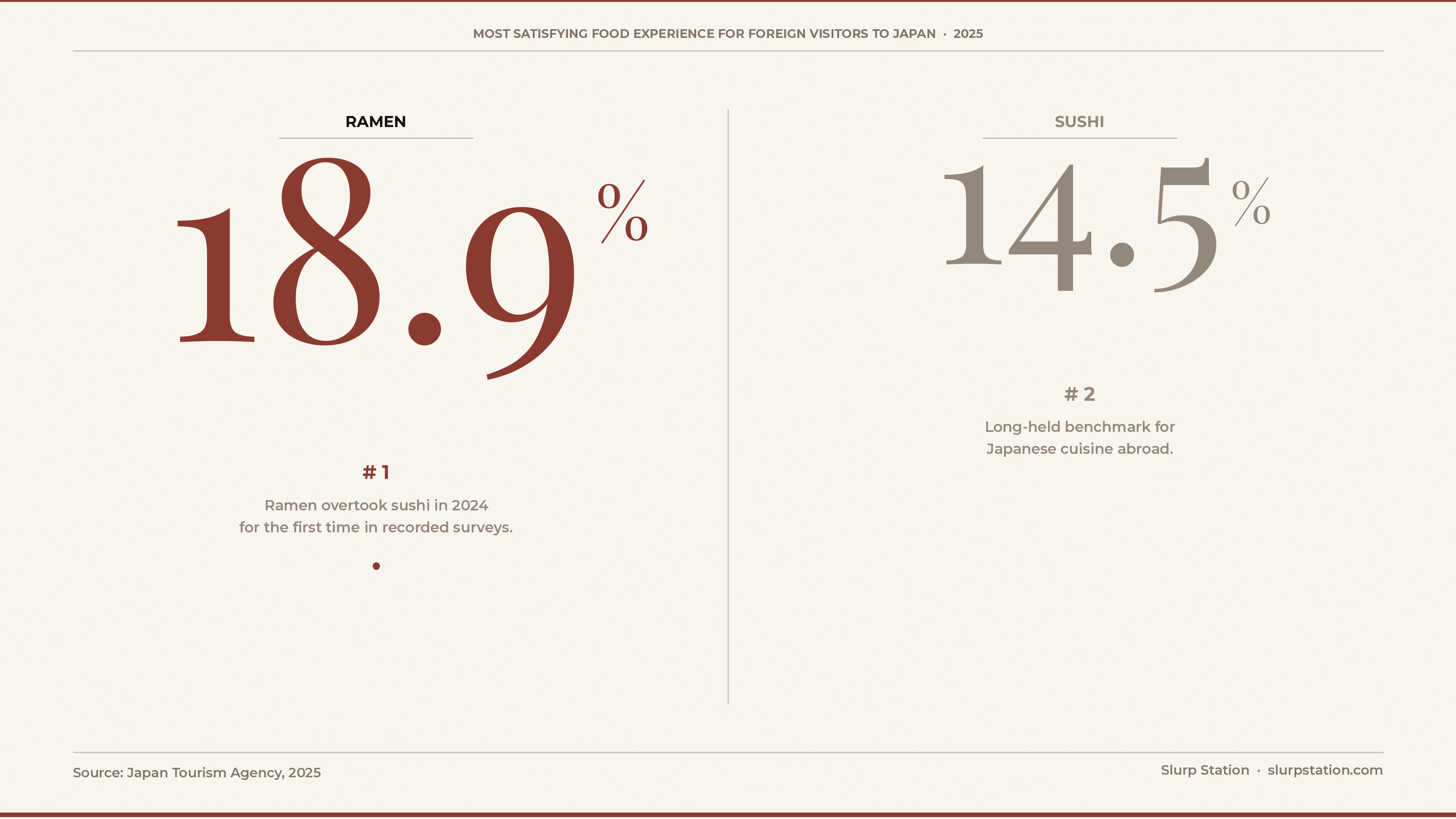
Source: Japan Tourism Agency, March 2025
Why Did This Happen?
The numbers tell part of the story: Japan drew over 31.7 million foreign tourists by September 2025 alone, on pace for a record year. That wave of global visitors didn't just want to see Japan — they wanted to eat it. All of it. And what they kept coming back to was ramen.
The reason isn't hard to trace. Sushi has been flattened into a global cliché. You can get a spicy tuna roll in an airport. You can get it in a supermarket in Indiana. But ramen? Real ramen — the hyper-regional, craft-obsessed, flavor-at-every-price-point kind — that still feels like something you have to go find.
And find it they do. The ramen market in Japan has grown roughly 60% over the last decade, with analysts projecting the industry to hit 7.9 billion yen. That's not fast food economics. That's a craft industry with mainstream scale.
Ramen Isn't Cheap Noodles Anymore
The old framing — sushi = prestige, ramen = street food — is done. Japanese ramen has become one of the most technically demanding cuisines in the world. Shops spend years perfecting their tare. Lines form before opening. Michelin started paying attention.
In Japan, you can eat tonkotsu in Fukuoka, shoyu in Tokyo, and miso in Sapporo — and have three completely different experiences, each built around a specific soup philosophy that took a lifetime to develop.
What's driving the category isn't nostalgia or novelty. It's craft. Regional diversity. The kind of depth that travelers now expect from great food — wherever they find it.
Enter Aburasoba — The Insider's Move
Within ramen's rise, there's a more specific wave worth watching: brothless ramen.
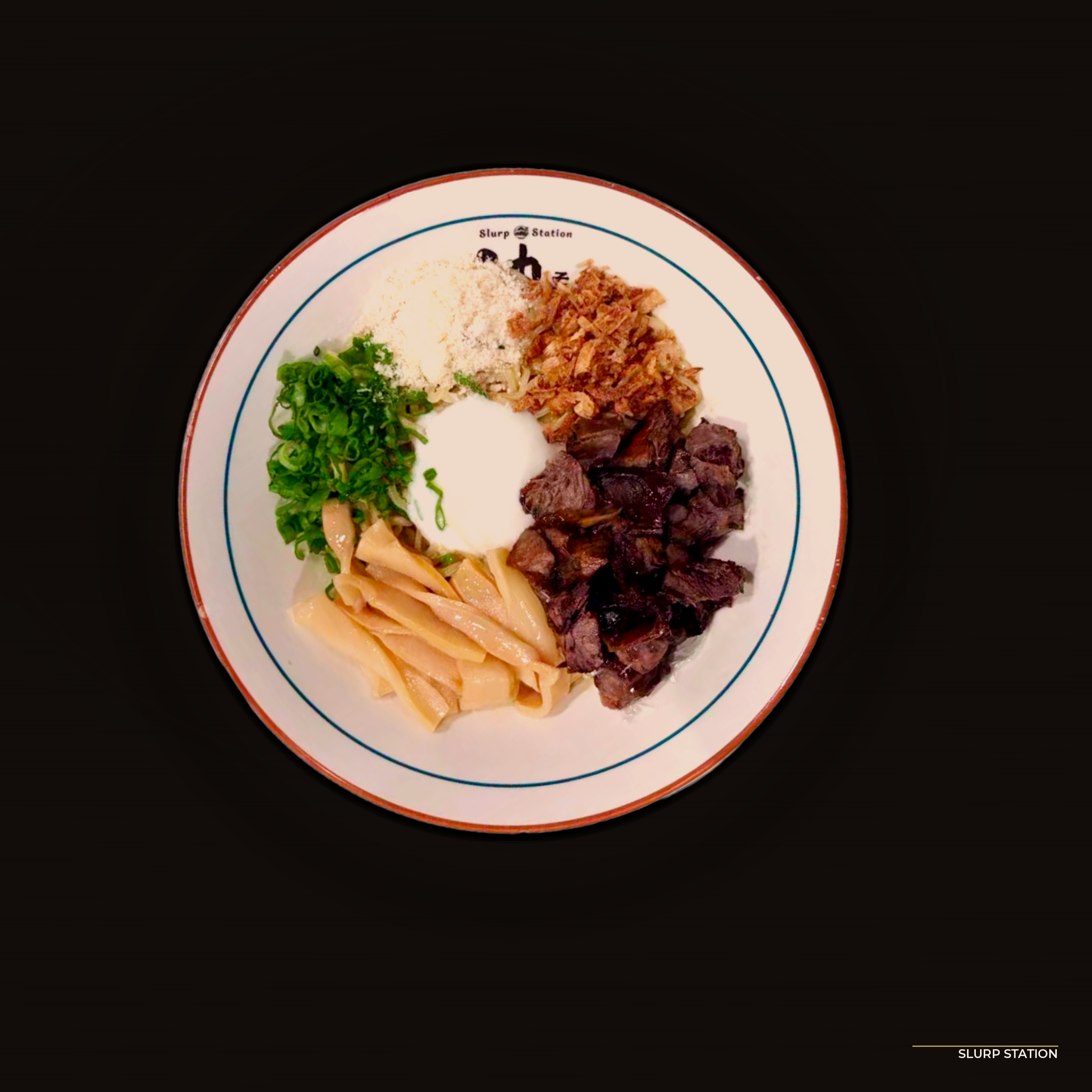
Abura soba (油そば) — dry-style ramen with no broth, just thick noodles coated in a concentrated tare sauce, fat, and heat — has been spreading across Japan's convenience stores, chain restaurants, and specialty shops. It's showing up on seasonal menus. It's going viral. It's the format food nerds reach for when they want to understand ramen beyond the bowl.
Why? Because when the broth disappears, every other element has to earn its place. The noodles need to carry. The sauce needs to be exact. Aburasoba is ramen stripped to its spine — and what's left is pure.
Seattle, You Don't Have to Book a Flight
If ramen just overtook sushi as Japan's most celebrated dish, and the leading edge of that wave is brothless ramen — then Seattle has something most cities don't.
At Slurp Station in the U District, aburasoba Seattle is what we do. Not a side item. Not a trend we bolted onto the menu. It's the whole point — dry ramen Seattle diners can get right now, built the way they make it in Japan.
The dish that just beat sushi is here. Come try it.
The Dish That Beat Sushi Is Here
Slurp Station serves the best ramen Seattle doesn't have a broth for — concentrated, craft-focused aburasoba inspired by the Musashino tradition. Open daily 11 AM – 9 PM at 4701 Brooklyn Ave NE, U District. Free parking.